Showing posts with label Meaning of Flowers - A. Show all posts

Azalea - Passion


Azalea meanings: Abundance, take care, temperance, fragile, passion, Chinese symbols of womanhood

Azaleas are flowering shrubs comprising two of the eight subgenera of the genus Rhododendron, Pentanthera (deciduous) and Tsutsuji (evergreen). Azaleas bloom in spring, their flowers often lasting several weeks. Shade tolerant, they prefer living near or under trees.
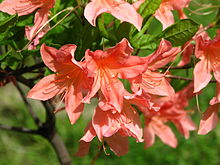
Azaleas differ from rhododendrons in being generally smaller and having one blossom per stem rather than blossom clusters.

Plant enthusiasts have selectively bred azaleas for hundreds of years. This human selection has produced over 10,000 different cultivars which are propagated by cuttings. Azalea seeds can also be collected and germinated.

Azaleas are generally slow-growing and do best in well-drained acidic soil (4.5 - 6.0 pH). Fertilizer needs are low; some species need regular pruning. Azaleas are native to several continents including Asia, Europe and North America. They are planted abundantly as ornamentals in the southeastern US.

Cultural significance and symbolism
In Chinese culture, the azalea is known as "thinking of home bush" (siangish shu) and is immortalized in the poetry of Tu Fu and is used to rich effect in contemporary stories such as by Taiwanese author Pai, Hsien-Yung.

The azalea is also one of the symbols of the city of São Paulo, in Brazil.

Azalea festivals
United States: Many cities in the United States have festivals in the spring celebrating the blooms of the azalea, including Norfolk, Virginia; Wilmington, North Carolina (North Carolina Azalea Festival); Valdosta, Georgia; Palatka, Florida (Florida Azalea Festival).

The Azalea Trail is a designated path, planted with azaleas in private gardens, through Mobile, Alabama. The Azalea Trail Run is an annual road running event held there in late March. Mobile, Alabama is also home to the Azalea Trail Maids, fifty women chosen to serve as ambassadors of the city while wearing antebellum dresses, who originally participated in a three-day festival, but now operate throughout the year.

Japan: Motoyama, Kochi also has a flower festival in which the blooming of Tsutsuji is celebrated and Tatebayashi, Gunma is famous for its Azalea Hill Park, Tsutsuji-ga-oka. Nezu Shrine in Bunkyo, Tokyo, holds a Tsutsuji Matsuri from early April until early May.

Korea: Sobaeksan, one of the 12 well-known Sobaek Mountains, lying on the border between Chungbuk Province and Gyeongbuk has a Royal Azalea (Rhododendron schlippenbachii) Festival held on May every year. Sobaeksan has an azalea colony dotted around Biro mountaintop, Gukmang and Yonwha early in May. When Royal azaleas have turned pink in the end of May, it looks like Sobaeksan wears a pink Jeogori (Korean traditional jacket).


Source, Images: http://en.wikipedia.org/wiki/Azalea

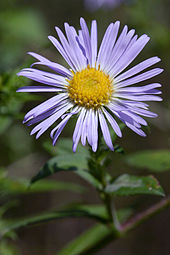
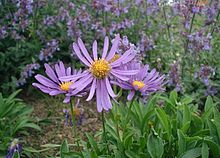
Aster - Symbol of love


Aster meanings: Contentment, symbol of love, daintiness, talisman of love, trusting

Aster (syn. Diplopappus Cass.) is a genus of flowering plants in the family Asteraceae. The genus once contained nearly 600 species in Eurasia and North America, but after morphologic and molecular research on the genus during the 1990s, it was decided that the North American species are better treated in a series of other related genera. After this split there are roughly 180 species within the genus, all but one being confined to Eurasia. The name Aster comes from the Ancient Greek word στήρ (astér), meaning "star", referring to the shape of the flower head. Many species and a variety of hybrids and varieties are popular as garden plants because of their attractive and colourful flowers. Aster species are used as food plants by the larvae of a number of Lepidoptera species. Asters can grow in all hardiness zones.

The genus Aster is now generally restricted to the Old World species, with Aster amellus being the type species of the genus, as well as of the family Asteraceae. The New World species have now been reclassified in the genera Almutaster, Canadanthus, Doellingeria, Eucephalus, Eurybia, Ionactis, Oligoneuron, Oreostemma, Sericocarpus and Symphyotrichum, though all are treated within the tribe Astereae. Regardless of the taxonomic change, all are still widely referred to as "asters" in the horticultural trades.

In the UK there are only two native members of the genus: Goldilocks, which is very rare, and Aster tripolium, the Sea aster. Aster alpinus spp. vierhapperi is the only species native to North America.


Source, Images: http://en.wikipedia.org/wiki/Aster_(genus)

Arum - Ardor

Arum meaning: Ardor

Arum is a genus of about 25 species of flowering plants in the family Araceae, native to Europe, northern Africa, and western Asia, with the highest species diversity in the Mediterranean region.

They are rhizomatous, herbaceous perennial plants growing to 20-60 cm tall, with sagittate (arrowhead-shaped) leaves 10-55 cm long. The flowers are produced in a spadix, surrounded by a 10-40 cm long, coloured spathe, which may be white, yellow, brown or purple; some species are scented, others not. The fruit is a cluster of bright orange or red berries.


All parts of the plants are poisonous, containing significant amounts of calcium oxalate as raphides.


Source, Images: http://en.wikipedia.org/wiki/Arum

Apple blossom - Preference


Apple blossom meanings: Preference, promise

Apple blossom is the Michigan State flower, and also the state flower of Arkansas. There are, probably, nearly 1000 varieties of Apple blossom cultivated in the United States, and all of which are said to be derived from the Wild crab (Pyrus coronaria, Linn).

Apple blossom tree is a well-known tree, growing from 20 to 40 feet high, with rigid, crooked, spreading branches, and a rough, blackish bark. The apple tree is a native of Europe, and the Apple blossoms come from April to June. From the fruit, cider is manufactured, and both the fruit and its cider are much used for domestic and medicinal purposes.

Apple blossoms have Cherry pink and white petals. The Apple blossoms are very fragrant and scent the May landscape. The Apple blossoms are large expanding with the leaves, and borne in subumbellate corymbs. The calyx-tube of the Apple blossoms is urn-shaped, with limb 5-cleft. The pedicels and calyx on the Apple blossoms are villose-tomentose.

Apple blossoms have 5, roundish, or obovate petals, with short claws. The stamens of Apple blossoms are numerous and styles number 5. The Apple blossom's styles are united and villose at base. The fruit is greenish and ripens in September, and is typically 5-8 cm in diameter (rarely up to 15 cm) like a small apple; yellow-green, maturing in late summer.

Facts about Apple Blossoms
Trees under the section Malus are the finest flowering trees are those included, the type of which is the common Crab Apple (M. communis).

World's top apple producers are China, United States, Turkey, Poland and Italy.
Apples have five seed pockets or carpels. Each pocket contains seeds.
The number of seeds per carpel is determined by the vigor and health of the plant.
Different varieties of apples will have different number of seeds.


Images: http://en.wikipedia.org/wiki/Apple

Angrec - Royalty


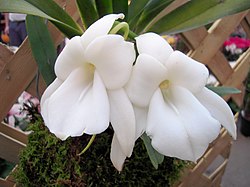
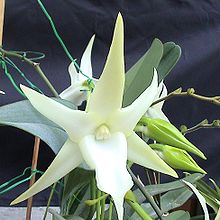
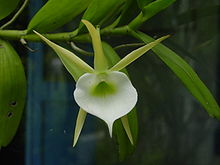
The genus Angraecum, abbreviated as Angcm in horticultural trade, common name Angrek (Indonesian and Malay) or Comet Orchid, contains about 220 species, some of them among most magnificent of all orchids. They are quite varied vegetatively and florally and are adapted to dry tropical woodland habitat and have quite fleshy leaves as a consequence. Most are epiphytes, but a few are lithophytes.

Tropical Africa and Madagascar contain the majority of the genus with one outlier found on Sri Lanka, and three species once thought to belong to the genus in Japan and the Philippines. But these orchids can also be found on the Comoros, the Seychelles, and the Mascarenes. They occur between sea level and 2,000m in humid regions.

The long-lasting flowers are racemose and grow from the leaf axils. They are mostly white, but a few are yellow, green or ochre. They all have a long spur at the back of the labellum (lip).

In the case of Angraecum sesquipedale, a species from Madagascar, on observing the 30cm spur in the lip, Charles Darwin made the hypothesis that, since the nectar was at the bottom of the spur, a pollinator must exist with a tongue at least that long. Otherwise the orchid could never be pollinated. At the time, he was not believed. However, in 1903, the predicted pollinator was discovered, a hawk moth then named Xanthopan morganii praedicta ("praedicta" meaning "the predicted one"). It has an appropriately long proboscis. The specific name sesquipedale means "one foot and a half", referring to the length of the spur. This is a perfect example of mutual dependence of an orchid and a specific pollinator.

Many species of Angraecum orchid are considered to be at risk of extinction in the wild and are protected from international trade under CITES. The genus Angraecum is listed as one of the top conservation priorities by the International Union for Conservation of Nature and Natural Resources (IUCN) Orchid Specialist Group. Many of the species, such as Angraecum sororium, are endemic to Madagascar and are threatened from over collecting, loss of hawkmoth pollinators, habitat fragmentation, and fire.

Growing Angraecums
Much like all other orchids, Angraecums have no need for special care or attention. Like all other orchids it is best to water in the mornings to avoid fungal rot due to overnight dampness. Feeding as per other orchids and similar light conditions: in humid and hot regions (sub tropical) feed fortnightly during growing season (Summer) with a certified orchid fertilizer following directions on packet, weaker solutions are also okay if you're worried. In summer water weekly or more depending on situation. Angraecums flower best when in a lighter position. Keep out of direct sunlight as this can damage (and eventually kill) the plant. Most Angraecums will have their leaves for a number of years so any sun burn spots are ugly for a significant period and also may expose your plant to disease. In indirect sunlight the Angraecums will reward you with blooms and attractive growth.

Angraecum Veitchii: a very rewarding orchid. In indirect light and watered/fed regularly this plant will produce blooms annually (usually in Late Winter to Spring - for Australia this occurs in August - excellent for those wanting to show their plants at Brisbane's Ekka! You will notice a few lovely specimens there in the Gardening Exhibits). The flowers last a while if kept in a sheltered position and their strong heady fragrance is delightful. They only release their perfume at night. Flowers are large (4 - 9 cm across), waxy, white to greenish cream in colour and borne on stems of seven to ten depending on the faithfulness of your fertilizing, watering, and indirect light provision. The leaves are large, thick straps that alternately fan out from a central (monopodal) stem. Pups (keikis) form at the base of the stem and can either be divided from the parent plant once they have at least three roots of their own or alternatively, left on the plant these will make a stunning specimen as when mature will produce blooms with the parent plant - many award winning angraecum veitchiis are grown as such.

In the right conditions these orchids are healthy and require little attention. As they are epiphites the potting mixture should be loose and free draining. Prolific roots are formed from the base and also amongst the lower half of the foliage. These are attractive although somewhat troublesome when moving plants to and from shows. Once your angraecum is big it is best to pot it in a heavy terracotta pot or place a brick in the bottom of the pot in order to ensure your beauty does not get top heavy and risk snapping when blown over in the wind (especially since they flower during the windier times of the year, this can be very sad). When watering a good soaking with a hose or watering-can is best (not just a misting from a spray gun) as this helps to flush away any salts from fertilizers that may be present in the potting mixture and also thoroughly wets the plant. Make sure the roots halfway up the stem get a soaking too, not just the potted roots. This is a great orchid and will give you years of pleasure. They're slow growing and require little attention. They’re very hard to kill.


Source, Images: http://en.wikipedia.org/wiki/Angrec

Anemone - Fragile


Anemone meanings: Fragile, forsaken, sickness, unfading love

Anemone is a genus of about 120 species of flowering plants in the buttercup family Ranunculaceae in the north and south temperate zones. They are closely related to Pasque flowers (Pulsatilla) and Hepaticas (Hepatica); some botanists include both of these genera within Anemone.

According to the Oxford English Dictionary, Greek anemōnē means "daughter of the wind", from ánemos "wind" + feminine patronymic suffix -ōnē. But others suggest that this is a folk etymology, and that the word actually comes from a Semitic language.

Description
Anemone are perennials that have basal leaves with long leaf-stems that can be upright or prostrate. Leaves are simple or compound with lobed, parted, or undivided leaf blades. The leaf margins are toothed or entire.

Flowers with 4-27 sepals are produced singly, in cymes of 2-9 flowers, or in umbels, above a cluster of leaf- or sepal-like bracts. Sepals may be any color. They are bisexual 10 to 200 stamens and many simple pistils. The pistils have one ovule. The flowers have nectaries, but petals are missing in the majority of species.

The fruits are ovoid to obovoid shaped achenes that are collected together in a tight cluster, ending variously lengthened stalks; though many species have sessile clusters terminating the stems. The achenes are beaked and some species have feathery hairs attached to them.

Cultivation
Many of the species are favorite garden plants, particularly since the different species can provide flowers throughout the year.

Of the late spring bulbs, A. blanda is one of the most common, and is often sold as a mixture of colours, although purple predominates. The genus contains many other spring-flowering plants, of which A. hortensis and A. fulgens have less divided leaves and splendid rosy-purple or scarlet flowers. They require similar treatment.

Among the best known summer anemone is Anemone coronaria, often called the poppy anemone, a tuberous-rooted plant, with parsleylike divided leaves, and large showy poppylike blossoms on stalks of from 15–20 cm high; the flowers are of various colours, but the principal are scarlet, crimson, blue, purple, and white. There are also double-flowered varieties, in which the stamens in the centre are replaced by a tuft of narrow petals. It is an old garden favourite, and of the double forms there are named varieties.

Anemone hupehensis, and its white cultivar 'Honorine Joubert', the latter especially, are amongst the finest of autumn-flowering hardy perennials; they grow well in light soil, and reach 60–100 cm in height, blooming continually for several weeks. A group of dwarf species, represented by the native British A. nemorosa and A. apennina, are amongst the most beautiful of spring flowers for planting in woods and shady places.

Anemones grow best in a loamy soil, enriched with well-rotted manure, which should be dug in below the tubers. These may be planted in October, and for succession in January, the autumn-planted ones being protected by a covering of leaves or short stable litter. They will flower in May and June, and when the leaves have ripened should be taken up into a dry room till planting time. They are easily raised from the seed, and a bed of the single varieties is a valuable addition to a flower-garden, as it affords, in a warm situation, an abundance of handsome and often brilliant spring flowers, almost as early as the snowdrop or crocus. Anemone thrives in partial shade, or in full sun provided they are shielded from the hottest sun in southern areas. A well-drained slightly acid soil, enriched with compost, is ideal.

It is best to harvest cut flowers early in the morning while it is still cold outside while the bloom is still closed. To open your flowers place in room temperature water out of direct sun. Anemones are a great cut flower and will give you around nine days of vase life when properly cared for. Anemone blooms can be purchased from a florist between November and June depending upon availability.


Source, Images: http://en.wikipedia.org/wiki/Anemone

Amaryllis - Pride


Amaryllis meanings: Dramatic, pride

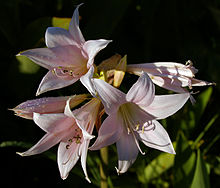
Amaryllis is a small genus of flowering bulbs, with two species. The better known of the two, Amaryllis belladonna, is a native of South Africa, particularly the rocky southwest region near the Cape. For many years there was confusion amongst botanists over the generic names Amaryllis and Hippeastrum, one result of which is that the common name "amaryllis" is mainly used for cultivars of the genus Hippeastrum, widely sold in the winter months for their ability to bloom indoors. Plants of the genus Amaryllis are known as belladonna lily, naked lady, or amarillo.

Amaryllis is a bulbous plant, with each bulb being 5–10 cm in diameter. It has several strap-shaped, green leaves, 30–50 cm long and 2–3 cm broad, arranged in two rows. The leaves are produced in the autumn or early spring in warm climates depending on the onset of rain and eventually die down by late spring. The bulb is then dormant until late summer. The plant is not frost-tolerant, nor does it do well in tropical environments since they require a dry resting period between leaf growth and flower spike production.

From the dry ground in late summer (August in zone 7) each bulb produces one or two leafless stems 30–60 cm tall, each of which bears a cluster of 2 to 12 funnel-shaped flowers at their tops. Each flower is 6–10 cm diameter with six tepals (three outer sepals, three inner petals, with similar appearance to each other). The usual color is white with crimson veins, but pink or purple also occur naturally. The common name "naked lady" stems from the plant's pattern of flowering when the foliage has died down.

The species was introduced into cultivation at the beginning of the eighteenth century. They reproduce slowly either by bulb division or seeds and have gradually naturalized from plantings in urban and suburban areas throughout the lower elevations and coastal areas in much of the West Coast of the USA since these environments mimic their native South African habitat.

There is an "Amaryllis Belladonna Hybrid" which was bred in the 1800s in Australia. No one knows the exact species it was crossed with to produce color variations of white, cream, peach, magenta and nearly red hues. The hybrids were crossed back onto the original Amaryllis belladonna and with each other to produce naturally seed bearing crosses that come in a very wide range of flower sizes, shapes, stem heights and intensities of pink. Pure white varieties with bright green stems were bred as well. The hybrids are quite distinct in that the many shades of pink also have stripes, veining, darkened edges, white centers and light yellow centers also setting them apart from the original light pink. In addition, the hybrids often produce flowers in a fuller circle rather than a "side facing" habit like the "old fashioned" pink. The hybrids are able to adapt to year round watering and fertilization but can also tolerate completely dry summer conditions if need be.

Amaryllis belladonna has been crossed in cultivation with Crinum moorei to produce a hybrid called × Amarcrinum, which has named cultivars. Hybrids said to be between Amaryllis belladonna and Brunsvigia josephinae have been called × Amarygia, Neither hybrid genus name is accepted by the World Checklist of Selected Plant Families.

The name Amaryllis is taken from a shepherdess in Virgil's pastoral "Eclogues", from the Greek μαρύσσω (Latin amarysso) meaning "to sparkle."

The taxonomy of the genus has been controversial. In 1753 Carl Linnaeus created the name Amaryllis belladonna, the type species of the genus Amaryllis. At the time both South African and South American plants were placed in the same genus; subsequently they were separated into two different genera. The key question is whether Linnaeus's type was a South African plant or a South American plant. If the later, Amaryllis would be the correct name for the genus Hippeastrum, and a different name would have to be used for the genus discussed here. Alan W. Meerow et al. have briefly summarized the debate, which took place from 1938 onwards and involved botanists on both sides of the Atlantic. The outcome was a decision by the 14th International Botanical Congress in 1987 that Amaryllis L. should be a conserved name (i.e. correct regardless of priority) and ultimately based on a specimen of the South African Amaryllis belladonna from the Clifford Herbarium at the British Museum.

Common name
Although the 1987 decision settled the question of the scientific name of the genus, the common name "amaryllis" continues to be used differently. Bulbs sold as amaryllis and described as "ready to bloom for the holidays" belong to the allied genus Hippeastrum. The common name "naked lady" used for Amaryllis is also used for other bulbs with a similar growth and flowering pattern; some of these have their own widely used and accepted common names, such as the resurrection lily (Lycoris squamigera).


Source, Images: http://en.wikipedia.org/wiki/Amaryllis

Amaranth (Globe) - Immortal love


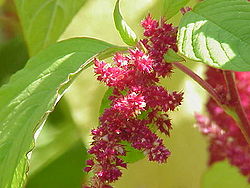
Amaranthus, collectively known as amaranth, is a cosmopolitan genus of herbs. Approximately 60 species are recognized, with inflorescences and foliage ranging from purple and red to gold. Members of this genus share many characteristics and uses with members of the closely related genus Celosia.

Although several species are often considered weeds, people around the world value amaranths as leaf vegetables, cereals, and ornamentals. The ultimate root of "amaranth" is the Greek μάραντος (amarantos) "unfading" with the Greek word for "flower" νθος (anthos) factoring into the word's development as "amaranth" - the more correct "amarant" is an archaic variant.

Amaranthus shows a wide variety of morphological diversity among and even within certain species. Although the family (Amaranthaceae) is distinctive, the genus has few distinguishing characters among the 70 species included. This complicates taxonomy and Amaranthus has generally been considered among systematists as a "difficult" genus.

Formerly, Sauer (1955) classified the genus into 2 sub-genera, differentiating only between monoecious and dioecious species: Acnida (L.) Aellen ex K.R. Robertson and Amaranthus. Although this classification was widely accepted, further infrageneric classification was (and still is) needed to differentiate this widely diverse group.

Currently, Amaranthus includes 3 recognized sub-genera and 70 species, although species numbers are questionable due to hybridization and species concepts. Infrageneric classification focuses on inflorescence, flower characters and whether a species is monoecious/dioecious, as in the Sauer (1955) suggested classification. A modified infrageneric classification of Amaranthus was published by Mosyakin & Robertson (1996) and includes 3 subgenera: Acnida, Amaranthus, and Albersia. The taxonomy is further differentiated by sections within each of the sub-genera.

Dyes
The flowers of the 'Hopi Red Dye' amaranth were used by the Hopi (a tribe in the western United States) as the source of a deep red dye. There is also a synthetic dye that has been named "amaranth" for its similarity in color to the natural amaranth pigments known as betalains. This synthetic dye is also known as Red No. 2 in North America and E123 in the European Union.

Ornamentals
The genus also contains several well-known ornamental plants, such as Amaranthus caudatus (love-lies-bleeding), a native of India and a vigorous, hardy annual with dark purplish flowers crowded in handsome drooping spikes. Another Indian annual, A. hypochondriacus (prince's feather), has deeply veined lance-shaped leaves, purple on the under face, and deep crimson flowers densely packed on erect spikes.

Amaranths are recorded as food plants for some Lepidoptera (butterfly and moth) species including the nutmeg moth and various case-bearer moths of the genus Coleophora: C. amaranthellaC. enchorda (feeds exclusively on Amaranthus), C. immortalis (feeds exclusively on Amaranthus), C. lineapulvella and C. versurella (recorded on A. spinosus).


Source, Images: http://en.wikipedia.org/wiki/Amaranth

Alstroemeria - Aspiring


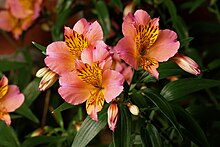
Alstroemeria (syn. Alstremeria), commonly called the Peruvian Lily or Lily of the Incas, is a South American genus of about 120 species of flowering plants. Almost all of the species are restricted to one of two distinct centers of diversity, one in central Chile, the other in eastern Brazil. Species of Alstroemeria from Chile are winter-growing plants while those of Brazil are summer-growing. All are long-lived perennials except A. (Taltalia) graminea, a diminutive annual from the Atacama Desert of Chile.

The genus was named for the Swedish baron Clas Alströmer (Claus von Alstroemer 1736 - 1794) by his close friend Carolus Linnaeus. The plant was first described by the French botanist Louis Feuillée. The plant's seeds were among many collected by Alströmer on a trip to South America in 1753.

The plants are distinctive vegetatively, with a rootstock consisting of a slender rhizome or group of rhizomes (the "crown"). Storage roots consist of sausage-like water storing structures "suspended" from the rhizome by major roots. In this way the root system resembles that of dahlias. Above-ground shoots may be very short in some alpine Andean species (a few inches tall) or up to about 5 feet (1.5 m) tall in other species. Each year (more often in some hybrids) up to 80 new shoots are produced from the rootstock and each terminates in an umbel of a few up to 10 or so flowers.

Perhaps the most fascinating- and telltale- morphological trait of Alstroemeria and its relatives is the fact that the leaves are resupinate, that is, they twist from the base so that what appears to be the upper leaf surface is in fact the lower leaf surface. This very unusual botanical feature is easily observed in the leaves on cut flowers from the florist.

The flowers of Alstroemeria are generally showy. All six tepals (tepal denotes either petal or sepal when both are similar, as in lilies, amaryllis, etc.) are roughly similar. In some species two tepals are enlarged and vividly colored and act as "flags" for pollination. The ovary is inferior and the seeds are hard and rounded. Alstroemeria is named after the Swedish botanist Baron Klas von Alstroemer.

Many hybrids and about 190 cultivars have been developed, with different markings and colors, ranging from white, golden yellow, and orange, to apricot, pink, red, purple, and lavender. The most popular and showy hybrids commonly grown today result from crosses between species from Chile (winter-growing) with species from Brazil (summer-growing). This strategy has overcome the problem of seasonal dormancy and resulted in plants that are evergreen, or nearly so, and flower for most of the year. This breeding work derives mainly from trials that began in the United States in the 1980s. The flower, which resembles a miniature lily, is very popular for bouquets and flower arrangements in the commercial cut flower trade. It has a vase life of about two weeks. It is sometimes also called 'Ulster Mary' (a corruption of the genus name).

Most cultivars available for the home garden will bloom in the late spring and early summer. The roots are hardy to a temperature of 23 °F (−5 °C). The plant requires at least six hours of morning sunlight, regular water, and well-drained soil.


Source, Images: http://en.wikipedia.org/wiki/Alstroemeria

Aloe - Grief


Aloe also Aloë, is a genus containing about 500 species of flowering succulent plants. The most common and well known of these is Aloe vera, or "true aloe".

The genus is native to Africa, and is common in South Africa's Cape Province, the mountains of tropical Africa, and neighboring areas such as Madagascar, the Arabian peninsula, and the islands of Africa.

The APG III system (2009) places the genus in the family Xanthorrhoeaceae, subfamily Asphodeloideae. In the past it has also been assigned to families Aloaceae and Liliaceae or lily family. Members of the closely allied genera Gasteria, Haworthia and Kniphofia, which have a similar mode of growth, are also popularly known as aloes. The plant Agave americana, which is sometimes called "American aloe", belongs to Asparagaceae, a different family.

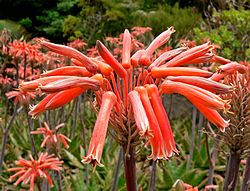
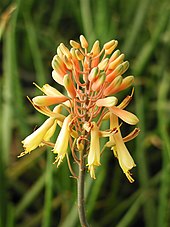
Most Aloe species have a rosette of large, thick, fleshy leaves. The leaves are often lance-shaped with a sharp apex and a spiny margin. Aloe flowers are tubular, frequently yellow, orange, pink or red, and are borne, densely clustered and pendant, at the apex of simple or branched, leafless stems.

Many species of Aloe appear to be stemless, with the rosette growing directly at ground level; other varieties may have a branched or unbranched stem from which the fleshy leaves spring. They vary in color from grey to bright-green and are sometimes striped or mottled. Some Aloes native to South Africa are arborescent.

Aloe species are frequently cultivated as ornamental plants both in gardens and in pots. Many Aloe species are highly decorative and are valued by collectors of succulents. Aloe vera is used both internally and externally on humans, and is claimed to have some medicinal effects, which have been supported by scientific and medical research. The gel in the leaves can be made into a smooth type of cream that can heal burns such as sunburn. They can also be made into types of special soaps.

Historical uses
Historical use of various Aloe species by humans is well documented. Documentation of the clinical effectiveness is available, although relatively limited.

Of the 500+ species of Aloe, only a few were used traditionally as a herbal medicine, aloe vera again being the most commonly used version of aloe in herbal medicine. Also included are Aloe perryi (found in northeastern Africa) and Aloe ferox (found in South Africa).

The Greeks and Romans used aloe vera to treat wounds. In the Middle Ages, the yellowish liquid found inside the leaves was favored as a purgative. Unprocessed aloe that contains aloin is generally used as a laxative, whereas processed aloe vera juice does not usually contain significant aloin.

Some species, particularly Aloe vera are used in alternative medicine and in the home first aids. Both the translucent inner pulp and the resinous yellow aloin from wounding the Aloe plant are used externally to relieve skin discomforts. As an herbal medicine, aloe vera juice is commonly used internally to relieve digestive discomfort. Some modern research suggests Aloe vera can significantly slow wound healing compared to normal protocols of treatment. Other reviews of randomised and controlled clinical trials have provided no evidence that Aloe vera has a strong medicinal effect.

Today, aloe vera is used both internally and externally on humans. The gel found in the leaves is used for soothing minor burns, wounds, and various skin conditions like eczema and ringworm. The extracted aloe vera juice aloe vera plant is used internally to treat a variety of digestive conditions. The use of this herbal medicine was popularized in the 1950s in many Western countries. The gel's effect is nearly immediate; it also applies a layer over wounds that is said to reduce the chance of any infection. Despite its popularity, aloe is an allergen and should always be tested before use.

There have been relatively few studies about possible benefits of Aloe gel taken internally. Components of Aloe may inhibit tumor growth. There have been some studies in animal models which indicate that extracts of Aloe have a significant anti-hyperglycemic effect, and may be useful in treating Type II diabetes. These studies have not been confirmed in humans.


Source, Images: http://en.wikipedia.org/wiki/Aloe

Almond - Promise


The almond (Prunus dulcis, syn. Prunus amygdalus Batsch., Amygdalus communis L., Amygdalus dulcis Mill.), is a species of tree native to the Middle East and South Asia. Almond is also the name of the edible and widely cultivated seed of this tree. Within the genus Prunus, it is classified with the peach in the subgenus Amygdalus, distinguished from the other subgenera by the corrugated shell (endocarp) surrounding the seed.

The fruit of the almond is not a true nut, but a drupe, consisting of an outer hull and a hard shell with the seed ("nut") inside. Shelling almonds refers to removing the shell to reveal the seed. Almonds are commonly sold shelled (i.e., after the shells are removed), or unshelled (i.e., with the shells still attached). Blanched almonds are shelled almonds that have been treated with hot water to soften the seedcoat, which is then removed to reveal the white embryo.

Description
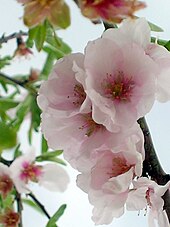
The almond is a small deciduous tree, growing 4–10 metres (13–33 ft) in height, with a trunk of up to 30 centimetres (12 in) in diameter. The young twigs are green at first, becoming purplish where exposed to sunlight, then grey in their second year. The leaves are 3–5 inches long, with a serrated margin and a 2.5 cm (1 in) petiole. The flowers are white or pale pink, 3–5 cm (1–2 in) diameter with five petals, produced singly or in pairs before the leaves in early spring.

Almonds begin bearing an economic crop in the third year after planting. Trees reach full bearing after five to six years after planting. The fruit is mature in the autumn, 7–8 months after flowering.

The almond fruit measures 3.5–6 cm (1–2 in) long. In botanical terms it is not a nut, but a drupe. The outer covering or exocarp, fleshy in other members of Prunus such as the plum and cherry, is instead a thick leathery grey-green coat (with a downy exterior), called the hull. Inside the hull is a reticulated hard woody shell (like the outside of a peach pit) called the endocarp. Inside the shell is the edible seed, commonly called a nut. Generally, one seed is present, but occasionally there are two.


Source, Images: http://en.wikipedia.org/wiki/Almond